Recent Movies
‏إظهار الرسائل ذات التسميات stew. إظهار كافة الرسائل

Lamb Curry – Sautée de Mouton au Curry

SAYING GOODBYE, COMING HOME

Sadness flies on the wings of the morning 
and out of the heart of darkness comes the light. 
- Jean Giraudoux 


Husband flew down to the south of France last Monday. He joined his sisters to say a final goodbye to his mother, Madeleine. Her last wish, this simple, homey, old-fashioned woman, was to be cremated, her ashes blended with those of her husband and her brother and the ashes strewn into the wind. She was a woman who asked very little of others, who gave much, gave what she could, and her passing, though expected, was sad indeed.

I was in the kitchen with my mother-in-law shortly after JP and I had announced that we would be getting married, helping her with the dishes after a Sunday lunch and she leaned towards me and confided “We knew it was serious when he brought you home to join us for Christmas dinner; just the very act of him bringing you here to meet us and we knew. He never brings girls home!” And we bonded just like that. Of course, there was the ritual pulling out of black and white photographs of American soldiers, the army men who liberated their northern French city at the end of the war, who brought them chocolate and cigarettes and made them feel proud, happy and secure once again. The tiny photos with the signature and a personal note written across the back was an object of pride and memory for these good, grateful people and it was shown to me excitedly as they recounted tales of meeting those Americans, the only Americans they had ever met before me some forty or so years later. They were tickled pink.

And I gave them their first grandson, a gift indeed.


Baking with grandmère

Snuggles with grandmère and grandpère

They accepted me with all of my oddities, my stumbling, imperfect French, my American ways and my Jewish religion, accepted me as a welcome part of their family. Over the years, I spent innumerable weekends and vacations in their home, innumerable Sunday lunches at their table eating blanquette, poulet roti frites, pot au feu or roast beef. Innumerable summer afternoons up in the branches of the big cherry tree in their yard or my arm stuck deep into the raspberry bushes tenderly pulling off each bright red berry, playing boules, petanque with the kids, bare feet in the soft grass. Innumerable Christmases watching the boys hang decorations and tinsel on the tree, set up the tiny crèche (that my little Jewish son explained as “Marie, le bonhomme, le bébé et les animaux”…), exchanging gifts.

Life was simple and cozy chez grandmère et grandpère

What a treat for the little boys to spend holidays and vacations with grandmère and grandpère out at the house on the hill, in the lost little village of barely 300 souls surrounded by green and cows and countryside. They were spoiled as only indulgent grandparents can spoil. We were living in Italy and as soon as Clem was old enough to fly unaccompanied, at the grand old age of 4, we began sending him north. Two years later he was joined by his baby brother, the fragile one, the persnickety one. I warned Madeleine that he was a tough one to deal with, especially in all matters food. I sent her a list of his likes and dislikes and she laughed and told me not to worry, she had years of experience dealing with children. A week or so later, I called to check in, and check up on the boys. “How is Simon doing?” I asked, worried out of my mind. “Is he eating?” “Oh!”, she assured me, “I have absolutely no problem with Simon! He eats everything I give him…clean plate at every meal!” “Oh, what are you feeding him?” I asked, wondering what I had been doing wrong for all these years. “White rice! I ask him before every meal what he would like, he answers ‘rice’ and I make him rice and he cleans his plate!” she said, without a hint of irony in her voice, proud as a peacock.

In grandpère's vegetable garden with Tonton Claude

Games in the garden under the cherry tree

She and I were as different as night and day, our backgrounds, our upbringing, our ideology and outlook on life, but we got along like a house on fire. She was kind and gentle, as smart as she was simple and straightforward and offered advice when I asked for it. We may have disagreed on how to raise children, feed and clothe them, but she loved the boys and they loved her and their relationship was perfect. She sat them at the kitchen table and let them help her cook, peel vegetables and press pâte sablée into the pie dish. She and my father-in-law taught them card games and board games with the patience of saints, racking up hours upon hours of rummy and scrabble, boggle and belotte, treating the boys as intellectual equals. Mornings spent in the vegetable garden with grandpère, afternoons in the tiny plastic swimming pool or sitting under the cherry tree looking at comic books, always rewarded with an ice cream. Over the years, my boys learned so much from their grandparents, mostly the joy of spending time with another generation.


When JP arrived back home, I had prepared a hot meal for him, a cross between his simple lamb curry sautée and his Sweet and Savory Lamb Stew with Raisins. A hot meal, a warming, soulful, filling meal to welcome him home and comfort his weary body and his sore heart. Dessert was my Ricotta Tart with Pears (this week’s Plated Stories’ recipe). Clem joined us and we dined as a family to the shimmering glow of the Hanukkah candles.


LAMB CURRY – SAUTÉE DE MOUTON AU CURRY

Stewing lamb (shoulder, neck, chops, etc) for 4 – about 800 g to 1 kg – in large chunks
Margarine + olive oil for sautéing
About 2 Tbs flour
1 large yellow or white onion, peeled, trimmed and coarsely chopped
½ red or green pepper, cleaned, trimmed, seeded and coarsely chopped
1/3 to ½ green chili (mild or hot, as you like), trimmed, seeds removed and finely chopped
1 clove garlic, peeled and crushed but left whole
1 Tbs tomato paste
2 tsps good curry powder
1 bay leaf
Salt and pepper
1 medium long or round zucchini, peeled and cubed
2 Tbs golden raisins

Heat about a tablespoon each of margarine and olive oil in a large pot or Dutch oven until hot and steaming. Add the chunks of lamb and brown on all sides. Remove the lamb from the pot onto a plate when browned.

Put more margarine and olive oil in the hot pot and add the chopped onion, red or green pepper, hot chili and the garlic clove and sautée, stirring often, until the onion is tender, transparent and beginning to color around the edges. Remove and discard the clove of garlic. Add the flour and, stirring continuously, cook for another 2 – 3 minutes until it no longer smells like flour. Deglaze with a bit of water (melt and scrape up the brown bits on the bottom of the pot) and then stir in the tomato paste, the curry powder, the bay leaf, salt and pepper. Add the lamb back to the post and add water just to cover. Bring to the boil then lower the heat, cover and simmer for 30 minutes.

At the end of 30 minutes, add the cubed zucchini and the raisins, cover the pot again and cook for another 45 minutes to an hour or until the meat is fork tender.

When the lamb is tender, check the sauce: taste and adjust the seasonings, adding more salt or pepper as needed; if the sauce is too watery, simply allow to simmer uncovered for a bit until it thickens.

Serve hot over rice or couscous grains.


Sweet and Savory Lamb Stew with Raisins

AUTUMN LEAVES

Let the stoics say what they please, we do not eat for the good of living, 
but because the meat is savory and the appetite is keen. 
– Ralph Waldo Emerson 


Autumn is many things in France. First and foremost, it is la rentrée. The start of the school year, back to work after a long, long vacation, the opening of a new session of parliament, the return of the regular newscasters and the customary run of television series. We settle back into a routine, a rhythm of life that the French describe as métro-boulot-dodo, commute-work-sleep. The daily grind. The same old, same old.

Autumn is the rainy season, storm sliding into drizzle, suddenly lighting up in a blaze of sunlight then dimming into gray, that invisible mist hitting you in the face, cold and wet, as you step outside, clinging to your skin, slithering into your coat collar and soaking the bottom three inches of your jeans. Back and forth, steely skies, hazy clouds hanging low and heavy masking the sun, which filters milky white and dull through the windows, a burst of light amid clear blue back to muddy skies and rain. Leaves in shades of gold and red line the sidewalks and streets yet form a swathe of sticky, matted carpet underfoot. The autumn weather in France is unpredictable, as unpredictable as the mood of the French themselves as the season whips into manif mode as well.


Le manif. The manifestation. Autumn in France is the season when the noise and brouhaha of demonstrations, carried along on the breeze, rise up to us from the streets below. From a mere handful of faithful partisans to a mob of angry hundreds, on foot, motorcycle or tractor, carrying flags and yelping through megaphones to the beat of some indecipherable chant or to the beat of something disco blaring from a truck, the disgruntled French take to the streets to demonstrate their discontent. We watch as the furious French block roads, close factories, barricade schools, overturn trucks of produce, crash through fences and gates, burn garbage and yank down radars in a seemingly never-ending ritual of protest. Under Autumn skies, when the sun is out and warm on our skin, these manifs just seem quaint and colorful, a part of the daily life in France along with the abundance of stunning produce on market stalls, warm, flakey croissants and sugary sweet popcorn at the cinema.


We have finally turned on the heat in the apartment, chasing the dampness and chill, creating a cozy nest as we keep inside, sandwiched between the rain outside the windows and the havoc wreaked by the demonstrators we see on television. We watch both warily, judgmentally, as we comment through gritted teeth, emitting grunts as the images flick by, as the rain spatters the sill. The sons pop in and out, clamoring for grilled cheese sandwiches, eaten on the run. School and work keep them moving, rarely here, busy bees. I watch the cherry pickers parked around town, huge monsters with silvery Christmas decorations clutched in their maws. Each time I leave the apartment, one more is strung up glowing in red and white; how I love the holidays.

Husband and I continue our cooking streak. We have been attempting to rein in the budget by shopping more intelligently, more purposefully and cooking more, leaving the laziness of takeout, the complacency of ready made behind. Back to basics, back to the way we used to cook. He is more often than not the one at the stove. Stews, tagines, couscous are his thing, turning even the cheapest cuts of meat, the earthiest of vegetables, reminiscent of the Old Country, into something spectacular. Potatoes and onions, carrots and zucchini, cabbage, beets, garlic and beans, chicken legs and beef tails metamorphose into rich, consoling, health-giving, heart-warming meals.


As much as I love sweet and savory dishes, fruit satisfying my sweet tooth yet somehow balancing perfectly with the meat, ambrosia for the soul, he does not. It is rare that he adds fruit to a meat dish, yet for some odd reason, he was in the mood for sweet. We had lamb, onions, garlic, peppers and zucchini. He tossed in golden raisins remaining from the last couscous; he caramelized the onions with sugar and deglazed the pan with cider vinegar. What he created was a gorgeous stew, the lamb falling apart it was so tender, the sauce thick and savory sweet, full of flavor. We neither of us expected something so outrageously good. And we settled into pure contentment.


Don't miss out on the very first Plated Stories workshop! Ilva Beretta and I are partnering with Tuscan Muse and holding an extraoridnary 10-day Tuscan adventure which includes a food writing & photography/styling workshop in the heart of Tuscany next May. Find out all about it on the Plated Stories blog or on the Tuscan Muse website.


Taste, which enables us to distinguish all that has a flavor from that which is insipid. 
- Jean Anthelme Brillat-Savarin 

SWEET AND SAVORY LAMB STEW

Lamb for 4: thick chops, slices of leg or shoulder
Flour for dredging
Margarine and olive oil for sautéeing
2 onions, peeled, trimmed and chopped
1 clove garlic, mashed but not chopped
1 large zucchini, round or long, trimmed and chopped into small chunks
½ red pepper, chopped
2 Tbs cider vinegar
½ tsp Adobo chili powder
1 – 2 tsps schwarma spice blend * (see below the recipe), can also be replaced by ½ tsp ground cumin + ½ tsp ground coriander + 1/8 tsp turmeric + dash paprika or any one of these to taste
1 tsp sugar
2 – 3 Tbs golden raisins
1 – 2 Tbs slivered almonds, lightly toasted

Dredge the lamb in flour and shake off the excess. Heat about a tablespoon each margarine and olive oil in a deep sautée pan, skillet or pot. When hot and steaming, brown the lamb pieces on both sides. Once browned, remove from the pan onto a plate or platter and set aside.

Add a bit more margarine and olive oil to the pot and add the chopped onion, garlic and red pepper and sautée, stirring often, until the onion bits are transparent, tender and begin to brown around the edges. Remove the garlic (discard) and add the teaspoon sugar and the small cubes of zucchini continue to cook until the onion is caramelized a deep golden brown and the zucchini and red pepper is tender. Add the cider vinegar to deglaze the pan: while the vinegar quickly evaporates, scrape up the blackened bits on the bottom of the pan until it all melts into the liquid; add a bit of water if needed.

Add the lamb back into the pan with the raisins and the spices, salt and pepper and add water just to cover. Bring just to the boil then lower the heat, cover and allow to simmer gently over very low heat for 1 hour 30 minutes, adding water as necessary.

Once finished cooking and the lamb fork tender, taste to adjust seasonings. Allow to sit and rest for as much time as possible (this is not necessary but we find that the flavors meld and the sauce thickens while the meat tenderizes even further), 30 minutes to an hour or prepare early in the day for dinner. Reheat gently just before serving (allow to simmer gently if you desire a thicker sauce.

Serve over rice or couscous grains topped with lightly toasted slivered almonds for crunch.


* Shawarma spice blend is a North African mix of ground spices which flavor tagines and grilled meats. If can be made at home by stirring together the following ground spices – or simply replace in this recipe with about ½ tsp ground cumin + ½ tsp ground coriander and a dash of cinnamon:

1 Tbs cumin
1 Tbs coriander
1 Tbs garlic powder
½ Tbs paprika
1 tsp turmeric
½ tsp cloves
½ tsp cayenne pepper
1 tsp black pepper
½ tsp cinnamon

Beouf Bourguignon and Allegrini Brunello di Montalcino

THE OLD CLASSICS AND A WINE PAIRING

Mangez bien, riez souvent, aimez beaucoup 
(Eat well, laugh often, love abundantly) 
– French saying 


Boeuf bourguignon was all the rage a couple of years ago in the blogging world, as if it was a dish newly invented, the next great challenge. These trends that seem to come and go in waves – the boeuf bourguignon and the coq au vin, the macarons, the bacon desserts – always make me wonder what creates this sudden desire that seems to consume so many all at once to make the same thing and eat the same thing all at the same time. The identical recipe, or a slight variation thereof, appears across thousands of blogs around the world over a rather short period of time, weeks or months, sometimes up to a year, and then disappears as suddenly, as inexplicably as it had arrived. And that recipe gets shuffled back to the archives of forgotten food.

Unless you live in a place where those recipes are simply daily fare.


Boeuf bourguignon has long been a classic of French home cooking originating, as the name implies, in the Bourgogne region of France known for both its beef and its wine. A dish both hardy and frugal, the boeuf bourguignon has long been the quintessential Sunday lunch. Using a cheaper cut of meat rendered tender through long, slow cooking, potatoes, carrots, onion and herbs from the family kitchen garden, simmered in red wine, not necessarily the best bottle, boeuf bourguignon has been one of those meat and potato meals that my husband and his mother and, without a doubt, his grandmother before him, turned to over and over again for a delicious yet simple and inexpensive meal. Beef stew, French style. 


The classic home dishes that most French families traditionally grow up on are indeed frugal one-pot meals meant to nourish and fill tummies, taking little time for the housewife (working alongside her husband and taking care of the children) to prepare. Boeuf bourguignon, much like veal blanquette, poule au pot or pot au feu, is a rather simple meal to prepare, to the contrary of what many bloggers see as an extravagant, fancy dish, one slaved over for hours and served up in great pomp. This actually took me quite by surprise and still does today. I tag along behind my husband as he does the marketing, the morning leaning towards noon, and suddenly, husband will get that look on his face, one of sudden decision and determination, and he grabs my hand and drags me to the butcher counter, the root vegetable guy whose stall is groaning under the weight of potatoes, onions of every variety, shallots both brown and purple, garlic, beans and grains, and finally to the vegetable stand.

How about a boeuf bourguignon? he’ll ask (or a pot au feu or a rabbit en gibelotte).

Really? I’ll ask, stunned and wide eyed in wonder and amazement, my American convenience food upbringing written all over my face. My admiration for this man as he stands at the counter chopping vegetables and over the stove as he tosses everything into a pot, pours on wine and promptly leaves the kitchen, allowing whatever is in the pot to cook itself to perfection, is without bounds.

And by lunchtime or dinnertime it is ready.


A meal without wine is like a day without sunshine. 
- Jean-Anthelme Brillat-Savarin, The Physiology of Taste, 1825 


This hardy, flavorful boeuf bourguignon needed to be accompanied by a rich, intense, full-bodied wine, much like the traditional Bourgogne, one that pairs so well with meats, game and stews, aged cheeses and mushrooms. I had recently received a selection of wines from the wonderful Allegrini Estates and my husband, the cook, and I decided to serve the 2008 Brunello di Montalcino with Boeuf Bourguignon. The Brunello di Montalcino is described as “intense and bright ruby red with garnet highlights….(revealing) typical aromas of violets and small red berries. There is a distinctive aroma of woodland undergrowth, aromatic wood and a light note of vanilla and preserved fruit, followed by subtle nuances of coffee.” The 2008 in particular is described as “silky, gracious and very nicely balanced with notes of tobacco, crushed flowers, spices which meld into red fruits.”

Personally, I found this wine much easier to drink, indeed silkier than its French counterpart, much smoother, fruitier with that spicy, peppery finish yet one that doesn’t make it go down with a bump. I am no wine expert and prefer lighter, fruitier wines than those of Bourgogne or Bordeaux which I find simply too strong and powerful, but the Brunello di Montalcino was surprisingly delicious, agreeable, smooth and so pleasurable to drink while offering a mouthful of flavors, a lingering aroma. It accompanied the boeuf bourguignon perfectly. The perfect marriage between something oh-so French and something spectacularly Italian.

This Brunello di Montalcino remaining in the bottle at the end of lunch or dinner pairs beautifully with artisan chocolates to round off the meal.

Thanks to the kind folks at Allegrini Estates/Allegrini USA. This is the first in a series of food and wine pairings I am doing with Allegrini and I heartily urge you to try their astonishing wines.


Wine makes a symphony of a good meal. -
Fernande Garvin, The Art of French Cooking, 1969 

BŒUF BOURGUIGNON


Serve 4 to 6 and makes excellent leftovers. Preparation time is close to 3 ½ to 4 hours which includes an hour resting time once the stew is cooked. This is a great dish to make the day before it is served then just gently reheated (or the morning for the evening).

About 1 lb 12 oz - 2 lbs (800 g - 1 kg) beef for stewing, cut into 8 – 10 large chunks
Olive oil or a mix of olive oil and margarine to sautée vegetables and brown meat
2 – 3 Tbs flour
2 small to medium onions, peeled and chopped coarsely
3 cloves garlic, crushed

Carrots and potatoes and mushrooms – the number depends on how much you like and want to eat (this from the Frenchman!). On average, 2 – 3 carrots, 1 lb/500 g potatoes, 10 oz/300 g mushrooms, each cleaned, trimmed, peeled and cut into large chunks.

1 bouquet garni (thyme, bay/laurel although you can add sauge and/or rosemary if desired)
1 bottle of intense wine such as a Burgundy or Bordeaux
Salt and freshly ground black pepper

If you like, marinate the chunks of beef in about a cup of wine or so overnight; this may make them more tender. Have the meat at room temperature before starting to cook.

Put about 3 or 4 tablespoons of olive oil or half olive oil and half margarine in a large heavy pot, one that will comfortably hold all of the meat and vegetables. When sizzling, add the chopped onions cook, stirring, until translucent and tender. Add the garlic and contnue cooking for another couple of minutes. Add the chunks of meat and brown on all sides.

Once the meat is browned (or colored), add the flour and toss until all of the meat is coated and the flour is absorbed; cook for a few more minutes. Add the bottle of wine until the meat is covered in liquid; top up with water if needed to cover the meat. Add the bouquet garni, salt and pepper. Bring to a boil, lower the heat to low, cover and allow to simmer for 1 hour.

While the meat is simmering, cook the potatoes in salted water until tender, about 25 to 30 minutes. Drain.

Add the carrots and the mushrooms cut into large chunks and the potatoes once the meat has simmered in the wine for 1 hour. Cover the pot again and continue cooking on a very low simmer for another 1 or until all of the vegetables are tender.

The cooking liquid should reduce into a rather thick sauce (ours could have been reduced a bit more), but watch towards the end – if it looks to be reducing too much and risks burning, don’t hesitate to add more liquid (water).

Turn off the pot, remove from the heat and allow to sit for an hour so the meat relaxes before serving. This is not necessary but recommended. Remove the bouquet garni before serving and discard.


Boeuf Bourguignon can also be cooked without the potatoes and served over cooked noodles or mashed potatoes or even polenta. Serve with a good, intense wine and a fresh loaf of bread.


JP’S MOROCCAN PRESERVED LEMON & OLIVE CHICKEN TAGINE

TAGINE DE POULET AUX CITRONS CONFITS ET OLIVES

Life is either a great adventure or nothing. 
– Helen Keller 


Some children are just born for adventure, have it in their blood, jump into new undertakings with both feet, laughing out loud. Clem was this child, courageous and curious. Happily dipping into a ditch, river or lake with both hands, a net or a fishing rod, buckets of snails or tadpoles or frogs found their way back home. Ever fearless, he tromped through woods, fields, beaches looking for animals, treasures, mushrooms, waltzed through museums and monuments, up dizzying tower staircases, boarded airplanes all alone which would take him flying off to far-away lands when he was all but a tiny four-year-old surrounded by strangers. And at ten, he and his father giddily prepared their backpacks for their newest adventure, a trekking holiday through the Moroccan desert.

I was knee-deep in researching my genealogy and vacationed in New York every chance I could get, spending my days at the archives and evenings meeting relatives newly discovered and quizzing them about family. The particular summer in question found me boarding a plane to the States, Simon’s small 8-year-old fist firmly in my hand and JP and Clem heading south to Morocco. While I was skimming birth records, naturalization certificates and keeping a small boy calm with an endless supply of superhero figurines and slices of pizza, JP was showing Clem the Old Country, the place he fell in love with all those many years ago.


 Photo courtesy of JP

They spent a glorious week in hiking boots, kicking up sand, days under the burning sun, nights tucked up in sleeping bags under the inky star-lit sky. Huge communal tents were set up for lunches and dinners, two gentlemen preparing tagines and couscous, salads and fruits, fresh breads to see them through the days. Clem was in his element, buoyant and excited, rolling down hills, sliding down mountains on the seat of his pants, running instead of walking, always twenty five paces ahead of his father. Nothing tired him out, nothing slowed him down. Food was gulped down, tents were put up, our little boy could have extended his adventure for an added week and he would not have flinched. While the only other child in the group – the same age as ours – whined and complained, cursed and caused trouble, Clem enjoyed himself thoroughly. Clem lived every single moment to the fullest in great pleasure and delight.

 Photo courtesy of JP

But two days or three were spent alone with his father in Marrakech. Clem and JP stayed in tiny hostels, a place to stash their luggage and lay their heads at night. Days were spent exploring the city, the markets, the sites, sounds, odors and flavors of Morocco. JP was back in his old stomping grounds, a place he knows so well, a culture he loves. And nothing thrilled him more than sharing this with his son, imparting the joy, the pleasure and the knowledge of this magical city, this fascinating country. And the food! For their very first meal in Morocco together, Clem ordered a Chicken Tagine with preserved lemons and olives. A big, bold order for such a young man, a meal bursting with flavors, salty, tangy, exciting! But Clem had always been a great eater, a bold eater and he was afraid of nothing. Driven by his passion for eating and his adventurous spirit, his curiosity and the excitement of being in a strange new country all alone, man to man, with his dad, he ordered this new dish. And fell in love with it. And for those several days, both before and after the hike, every mealtime found him ordering the same dish, Tagine de Poulet aux Citrons Confits et Olives – Chicken Tagine with Preserved Lemons and Olives.

We should come home from adventures, and perils, and discoveries 
every day with new experience and character. 
– Henry David Thoreau 


And once back home in the bosom of his family, our occasional jaunt to a Moroccan restaurant would find him perpetuating his far-away experience, titillating both taste buds and memories with the same dish, Tagine de Poulet aux Citrons Confits et Olives – Chicken Tagine with Preserved Lemons and Olives. And JP and I would smile at each other, understanding that that particular dish was not only infused with the bright flavors of olives, saffron and lemon, but with happy memories and that special father-son connection they shared in the sand.

And now, whenever JP decides to make this dish, we make sure Clem is there at the table with us and we smile… he may have forgotten that long ago trip to Morocco, that time spent exploring and dining out with his father, but we see that same ten year old, excited, talkative, adventurous, again and again, every time we serve this dish to him. Like magic.

JP makes this dish regularly with either chicken or fish. He cooks, as he says, au pif, by instinct, and any Tagine – any dish he makes – is adjusted as he goes along so the amount of liquid added, the cooking time, the amount of herbs or spices is all dependent upon taste and the immediate. The homey one-pot dishes he cooks usually are best prepared in advance, allowing the dish the time to sit, the sauce to thicken, the flavors to blend and meld and infuse the meat. Play around…. taste as you go. I have attempted to pin him down to specific amounts and cooking times, but do not be afraid to adjust as needed, to increase amounts to serve more people, to feel your way along the process. The basic directions are more than simple, and can be applied to almost any stew or tagine.

Find the inner child in you, kick up the adventure and enjoy.


TAGINE DE POULET AUX CITRONS CONFITS
Serves 4

Prepare the Tagine ahead of time to allow the chicken, once cooked, to sit for at least 20 minutes before reheating and serving.

1 chicken cut in pieces or 2 breast filets + 2 leg/thigh sections
½ preserved lemon (citron confit)
½ ladleful (a dozen or so) large purple olives
2 small onions, peeled, trimmed and finely chopped
1 clove garlic, peeled, trimmed and minced
Small potatoes, as many as desired for four people, peeled and cut into large cubes
1 small bouillon cube (stock cube)
½ tsp saffron powder, turmeric *
Salt and pepper

* One can also purchase yellow “saffron” powder in tiny sachets of individual portions; in France it is sold for making couscous, in Italy for making Risotto Milanese. Use one sachet or tiny packet for this Tagine.

Heat equal parts margarine and olive oil, not more than a tablespoon of each, in a large heavy-bottom pot or Dutch oven. Add the onion and garlic and cook, stirring, until tender and golden. Add the chicken pieces and toss/turn to coat with the oil; cook until golden on all sides. Add the potatoes and toss to coat.

Add the saffron powder or turmeric and the salt and pepper, toss the chicken and potatoes until everything is uniformly yellow; add the stock cube, the olives, the half preserved lemon cut in two pieces and 1 bowl of water (about a cup to a cup and a half), cover the pot and allow to simmer for at least 20 minutes or until the chicken and potatoes are cooked through and tender. Toss the chicken and potatoes occasionally during the cooking and add a little bit of water if and when necessary, if the level of water gets too low.

Once cooked, turn off the pot and, leaving it covered, allow to sit and cool a bit, at least 20 minutes – this is a dish that can easily be prepared ahead of time. Before serving, place the Tagine back on a low heat and slowly bring to a simmer; allow to simmer for 10 to 20 minutes to allow the sauce to thicken while the chicken and potatoes heat through. If the sauce is too thick or has evaporated, add more water before simmering; if the sauce is too watery, simply allow it to cook down on a very low simmer until desired consistency.

Beef Stew with Beer…

Enough said right?  How can beef stew simmered for hours in a nice hearty beer be bad?  In my books it can’t so when I was searching for a stew recipe and came across this one from Ree of The Pioneer Woman I knew I’d found what I was looking for.
DSC_0509
This soup was rich and delicious and made for a perfect weeknight meal for a busy family!
Beef Stew with Beer and Paprika (The Pioneer Woman)
Ingredients:
  • 3 Tablespoons Olive Oil
  • 1 Tablespoon Butter
  • 2 pounds Stew Meat (I dredged the meat in seasoned flour  (salt, pepper and garlic powder) before browning it)
  • 1 whole Medium Onion, Diced
  • 3 cloves Garlic, Minced
  • 1 can Beer, 12 Ounce Can
  • 4 cups Beef Stock (or 4 Cups Water + 4 Beef Bouillon Cubes)
  • 2 cups Water (additional, If Needed)
  • 1 Tablespoon Worcestershire Sauce
  • 2 Tablespoons Tomato Paste
  • 1/2 teaspoon Paprika
  • 1/2 teaspoon Kosher Salt
  • Freshly Ground Black Pepper
  • 1-1/2 teaspoon Sugar
  • 4 whole Carrots, Washed, Unpeeled, And Roughly Sliced
  • 4 whole New Potatoes, Quartered
  • Minced Parsley (optional)
Directions:
Heat oil and butter in a large pot over medium-high heat. Brown (floured and seasoned) meat in two batches, setting aside on a plate when brown. Cut pieces in half.
Add diced onions to the pot. Stir and cook for two or three minutes until softened, then add garlic for another minute. Pour in beer and beef stock, then add Worcestershire, tomato paste, paprika, salt, pepper, and sugar. Add beef back into the pot. Stir to combine. Cover and simmer for 1 1/2 to 2 hours.
*UPDATE: The liquid should cook down to a thicker state. If it gets too thick/reduces too much, add additional water as needed.
Add carrots and potatoes, then cover and cook for an additional 30 minutes. (If stew gets dry, just add a cup of hot water at a time to replenish the liquid.) Taste and adjust seasonings as needed.
***We loved this recipe and the only change I made was dredging the meat in seasoned flour (salt, pepper and a bit of garlic powder).  Will be making this again as soon as it’s cool enough…
signature

SWEET & SOUR OSSOBUCO AND RICOTTA TART

GO ITALIAN!


Our very first From Plate to Page workshop is approaching like a speeding train coming at us head on and we are tied to the tracks (though no Damsels in Distress, we four!)! I have been neck deep in conversation and preparation with Ilva, Meeta and Jeanne, tying up loose ends, planning the menus, dealing (happily) with our fabulous sponsors and finalizing details for our own writing workshop sessions with Jeanne so I have had very little time to devote to my own blog and my own dear readers. Bear with me for just a little while longer then hopefully I will be back with you a little more often.


Today I want to share a tale of two girlfriends who met across oceans and cyberspace, meeting somewhere in the middle. At first we tiptoed around each other, curious but hesitant, nervous yet intrigued, feeling the tug of compassion and interest yet not sure how fast to move forward. But we had too much in common and found that friendship grew in spite of our timidity. We were just two nice Jewish girls who had married Europeans, lovely, creative, talented men each. We share a peculiar subtle, intellectual yet wickedly sly sense of humor. We are both somewhat innocently naïve about people and the world at large and I can only hope and pray that I am half as generous and kindhearted as she. We each harbor a passion for travel and culture, a love of great food and feeding others and a joy of family. We are both passionate writers, loving the magic of the word, the beauty of black on white and the potential power contained in each word, phrase, story. And we both love Italy. Yes, of course, these two women are Lael and myself.


But I must backpedal a bit first. Lael was far from the first of her family whose notice was brought to my attention. It was actually in Italy about 15 years ago that I first learned of the illustrious name of Hazan. Living in the center of Milan, there was never a doubt that such a reader as I would not rapidly discover the tiny, dark English bookstore barely off the beaten track, slightly askew from the main stretch of road that rambled and bustled through my part of the city. I would spend hours in that warm, homey space, heaven for the book passionate, my fingers skimming softly along rows of book spines, murmuring titles softly under my breath. Occasionally, one would call to me, luring me into the pages between an intriguing cover or arousing my curiosity with a catchy title. I would carefully pull it from amongst the others, slide my hand down the cover as against a lover’s bare skin, hold it up to my nose and, eyes closed, breathe in the luxurious bouquet like a fine wine, the new book aroma making me dizzy with thoughts of quiet childhood moments nestled in an armchair or in the branches of a favorite tree, hidden from the world, losing myself in an adventure. Or I, already fascinated by food and cooking and the magic of a great cookbook, would wander over to the cookbook shelves and scan the meager offerings. And there it was, Marcella Hazan, the name veritably jumped out into my waiting hands, book after beautiful book on, yes, Italian cuisine. But as new a cook as I was, it was all too overwhelming for me and, losing all confidence, I always came to the conclusion that I simply could not live up to her recipes, my novice to her master, and sadly I would walk away, back out into the harsh Italian sunlight and find my way back home with yet one more Charles Dickens carefully tucked under my arm.

Many, many years later, traveling through space and time and happily ensconced in my new life, somewhat more confident in my cooking abilities, albeit much more secure in my talent as a writer than ever a cook I could be, I published my first articles on The Huffington Post. And lo and behold, the appearance of the second illustrious Hazan in my life: Giuliano left a warm, exuberant comment on one of those pieces I had written. And contact was made, Facebook and Twitter, such a charming, friendly man. And this connection followed quickly by an introduction to his wife, Lael. Oh we found each other without his help but the excuse was there to meet. And meet we did and slowly but surely a friendship bloomed across the miles, flying over that wide expanse of ocean. And finally, finally I bought a cookbook by a Hazan, Giuliano.

Far from Italy now, much too far for my own good, flipping through Every Night Italian brought all the sights and sounds, odors and flavors of my fabulous years in that marvelous country, a country where I truly learned the value of good food, ingredients straight from the dirt, simple cooking that turned those basic ingredients into something delectable, homey yet luxurious all at once. Arrosto, spezzatino, carciofi, budino and crostata, words that jump out at me from the page, are words heavy with memories for me, the first language of food for my baby boys, words infused with our seven years in Italy. My courage now stronger after years of experimenting and learning, I decided that it was time to delve into this book and….cook. And cook I did.


I began with Ossobuco in Agrodolce, Sweet and Sour Braised Veal Shanks, a twist on the traditional Ossobuco that I love so well, a favorite family meal. Normally I would serve this with a traditional Risotto alla Milanese, yellow saffron risotto, but selected instead Giuliano’s Risotto ai Pepperoni e Pomodoro Fresco, Red and Yellow Pepper Risotto, just to try two of his recipes at once. The meal was such an incredible success that several days later I made Pollo alle Olive Verdi, Chicken with Green Olives which, he explains, was actually first published in Marcella’s Italian Kitchen!


Well, friend or no friend, I warned Lael that I would be brutally honest – as friends should be – in my review of this book and the recipes. Well, to be totally upfront, I have to say that the food was stunning, amazing and simply fabulous! Each of the recipes was so simple to put together, even for the frazzled and less-than-confident such as me! And JP and I couldn’t get enough! The Ossobuco with the exotic flavors of a sweet and sour dish was probably one of the best meals we have eaten, although I will admit a simpler risotto would highlight the complex flavors of the Ossobuco much better. The Chicken with Green Olives was fabulous and maybe JP preferred this one of the two, yet I knew that both of these dishes were so heavenly, so flavorful and, yes, delicious, that each would become a part of my repertoire of family meals. All I know is that I had fallen in love with a cookbook and I will be making many, many meals out of it.


And an exchange of birthday gifts between Lael and me, who happen to both have birthdays in January, and I became the thrilled owner of How to Cook Italian, Giuliano’s third cookbook. Well, the book quickly filled up with tiny yellow stick-its bookmarking so many must-make recipes that it was truly hard to choose. But I settled on one filled with memories, a family favorite from Italy, Torta di Ricotta, a simple but far-from-humble Ricotta Tart, a special treat ordered after so many meals in so many Italian restaurants during those heady Italian years in Milan. And how was it? I must admit here that I had trouble with his pie crust, possibly because I had no food processor and it didn’t quite come together by hand (I felt it needed more butter), so I fell back on my own Sweet Pastry Crust. But the filling was a snap to put together, baked up beautifully, and created a simple yet luxurious, light yet creamy and just perfectly, tenderly sweetened ricotta tart and one that I most definitely will be making over and over again. JP swooned in delight and satisfaction with each mouthful, a sure sign of a great recipe in my home!


I already have so many recipes bookmarked that I will most definitely be making: the Torta della Nonna, Grandmother’s Custard Tart, Fettuccine or Risotto with Artichokes and of course Lael has heartily suggested that I make Giuliano’s Tiramisu and compare it to my son’s, all recipes from How to Cook Italian and his stunning Crostata all’Arancia, a Sicilian Orange Tart, and an incredible-sounding Semifreddo al Caffé from Every Night Italian. Do I have your attention yet?

Now, don’t think that I am going to give you every recipe from his wonderful books. No, no, you must go and find at least one of Giuliano’s Italian cookbooks very soon and make it your own to caress, ogle, stroke, read in the privacy of your own home. And cook. And cook. And cook. He offers us Italy in between the covers, simple, clean, flavorful dishes redolent of tradition and home.


Here is one recipe from each book, just enough for you to try and be tempted once you discover how easy and how fabulous they are. And if you are hungry for more delightful, delectable, thoroughly Italian recipes, visit Lael and Giuliano’s own blog The Educated Palate where you can also savor and enjoy Lael’s wonderful writing, her tales of family life and family cooking with some travel stories and fascinating facts and information thrown in. Thanks and a hug to Lael for being such a wonderful friend and to Giuliano for bringing me back to Italy in my own kitchen.

OSSOBUCO IN AGRODOLCE (Sweet and Sour Ossobuco)
From Every Night Italian by Giuliano Hazan

As Giuliano writes, this is a “different approach to the usual ossobuco… It is cooked with vinegar and raisins, whose sweet and sour flavors…complement the richness of veal shanks splendidly.” I say this is a stunning dish whose complex flavors and succulent, fall-off–the-bone-tender veal are my version of heaven.


¼ cup golden raisins
2 cups yellow onion, very thinly sliced crosswise
3 Tbs extra-virgin olive oil
Salt
2 to 3 Tbs vegetable oil
About ½ cup flour, or enough to coat the veal
Four 1 ½-inch-thick pieces veal shank or veal for ossobuco
Freshly ground black pepper
1 small beef bouillon cube (I use chicken)
1 Tbs shredded fresh basil leaves
½ tsp chopped fresh thyme leaves
1 tsp grated lemon zest

Place the raisins in a small bowl and cover with warm water.

Put the onion slices and the olive oil in a heavy braising pan large enough to hold all the veal in a single layer (I used my large Le Creuset Dutch oven). Place it over medium heat and sprinkle the onion lightly with salt. Cook until the onion turns a light caramel color. It may be necessary to raise the heat at the end to get the onion to color.

While the onion is cooking, put enough vegetable oil in a large skillet to come about ¼ inch up the sides and place it over high heat. Place the flour on a plate, roll the veal shanks in it and shake off the excess. When the oil is hot, carefully slip in the meat and brown it on both sides. Transfer to a platter and season with salt and pepper.

Once the onion is colored, raise the heat to medium-high. Add the vinegar and let it bubble for about 30 seconds. Put in the browned veal shanks. Add enough water to come halfway up the shanks and add the bouillon cube. Add the basil, thyme and lemon zest. Lift the raisins out of the water, squeeze out the excess water and add them to the pan. Cover and cook at a moderate but steady simmer until the meat is very tender, about 2 hours, turning the veal occasionally. Add more water if the water evaporates before the veal is done; you want to end up with a thick sauce. If the sauce is too watery at the end, remove the meat, raise the heat and reduce the sauce until thick enough to coat a spoon. Serve hot with Saffron Risotto.

This is one of those long-simmered dishes that gets better over time, improving as the flavors meld and the meat tenderizes in the sauce over a day or two. Simply reheat the veal in the sauce, adding a bit of water if necessary, over moderate heat.

TORTA DI RICOTTA (Ricotta Tart)
From How to Cook Italian by Giuliano Hazan

Lusciously creamy yet light and almost mousse-like, Giuliano adds chopped candied citron or lemon to the filling which I left out. Instead, inspired by my love of chopped chocolate bits in the rich ricotta filling of my Cannoli, I simply drizzled the top of the chilled tart with melted chocolate which solidifies as it hits the top of the cold ricotta filling and adds that fabulous crunch and a hint of slightly bitter chocolate flavor to the tart’s creaminess as you are eating it.


1 pre-baked Sweet Pastry Crust

1 large egg
1 large egg yolk
1/3 cup granulated sugar
1/3 cup flour
3 Tbs confectioner’s or powdered sugar
1 tsp vanilla
2 cups whole milk
2 cups (1 lb/500 g) whole-milk ricotta
2 Tbs chopped candied citron, optional

Preheat the oven to 350°F (180°C). Lightly but thoroughly butter a deep dish 9-inch pie pan, pie dish or springform pan.

Prepare the Sweet Pastry Pie Crust following my directions found here then line the prepared pie dish. Place a piece of parchment paper on top of the dough fitted and crimped into the dish and weigh down with pastry weights or dried beans. Bake in the preheated oven for 8 minutes. Very carefully pull the pie plate out of the oven and lift out the parchment and beans then return the pie crust to the oven and bake for an additional 10 minutes or until very lightly browned and completely set. If using a glass pie plate, you’ll be able to see that the underside of the crust is uniformly golden brown. Remove from the oven to a cooling rack or hotplate.

After the crust is done, raise the oven temperature to 375°F (190°C).

Prepare the ricotta filling while the Sweet Pastry Pie Crust is baking:

Whip the egg, the yolk and the granulated sugar in a large mixing bowl with an electric mixer on high speed until the mixture is smooth, thick and creamy and pale yellow. Add the flour, confectioner’s/powdered sugar and the vanilla and mix just until homogenous. Slowly pour in the milk while whisking on medium-low speed. Add the ricotta and blend thoroughly. If adding candied citron, stir it in now.

Pour the ricotta filling into the pie crust and bake until the filling is firm and begins to brown on top, 1 to 1 ¼ hours. Test by jiggling the pan gently. Remove from the oven and cool on a wire rack. Refrigerate for at least 3 hours or overnight before serving. Serve chilled, drizzled with a bit of melted chocolate, if desired.


The pie will keep for a few days in the refrigerator.


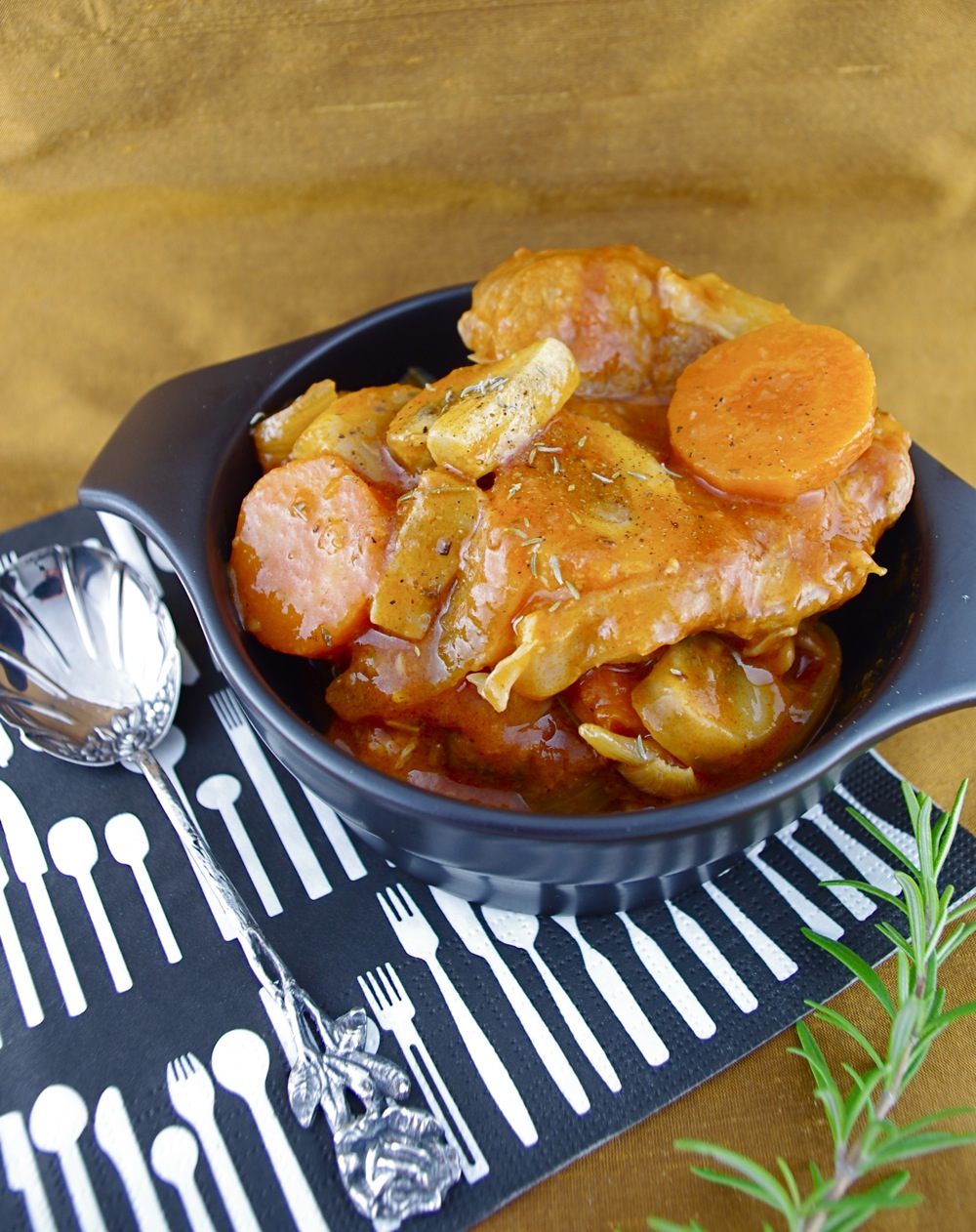
AUTUMN VEAL STEW

LET IT RAIN, LET IT RAIN, LET IT RAIN!

Many a man curses the rain that falls upon his head, and knows not that it brings abundance to drive away the hunger.
~Saint Basil

The rain has begun. It has washed away the golden glow of autumn, the brilliantly blue skies have melted into unpolished pewter, the gentle cool breeze has yielded to the cruel, chill wind and icy patter of rain. Rain, incessant rain, has taken over our world and wrapped us in her gloomy blanket of gray. The dampness seeps into our bones and we huddle together for warmth. And we dream of stew. Soup is fine and dandy for some, but nothing warms you to the marrow like a thick, rich, hearty stew. Chunks of meltingly tender meat long-simmered in a rich broth infused with the earthiness of thick slices of carrots, onions, mushrooms heightened by the gentle tang of white wine all blended together into a perfect mellow sensation. Served over rice or homemade pasta to be slurped up with the last of the sauce as you push back your chair from the table, satisfied.

The first days of autumn, the bright sun adding a gentle warmth to the mellowing temperatures, the crackle of gold and red leaves underfoot, bring a joy to my heart and a spring to my step. It is absolutely my favorite season. Weekends are spent walking the dog through the vineyards outside of Nantes or taking strolls through the city. The summer fruits are making way for the burnt orange of pumpkins and sweet potatoes, the deep violets of figs and plums, the tumble of grapes and the pyramids of pale green pears and apples snuggled up next to the warm woodsy browns of the walnuts and chestnuts. But then all is suddenly washed away as the rains sweep in, calling our attention to the change of seasons like a slap in the face.


Don't threaten me with love, baby. Let's just go walking in the rain.
~ Billie Holiday

I love the rain. I love being snuggled up inside as the water drizzles down the windowpanes and spatters on the cobblestones outside. It is the ultimate in cozy: sipping coffee, nestled in one’s favorite armchair, book in hand listening to the rhythmic patter of raindrops on the roof. Even the flash of lightening and the distant groan of thunder are exciting when warm and snug inside. But when the rain and the cold let themselves in and bring with them an unexpected dampness, forgotten sometime through the heat of the summer, and sitting still for even a few minutes has us grabbing for a thick, down-filled comforter and slipping on a second pair of socks, then all I want to do is migrate towards the kitchen, push baking sheets of dough into the oven as the heat and the smell of cinnamon wash over me and I simply begin to chop vegetables.


Some people walk in the rain, others just get wet.
~Roger Miller

This Autumn Veal Stew is simple, pure, uncluttered pleasure made with the most basic of ingredients: tender, slow-simmered meat, I chose veal today, the richness of tomato paste adding depth to the meaty sauce, a splash of wine and the hint of garlic bringing life and zing to the dish. The added texture and deeper, earthier flavor of a selection of mushrooms complements the usual, lowly carrot and onion and together they bring a luxuriousness to an otherwise simple stew.


The best thing one can do when it's raining is to let it rain.
~Henry Wadsworth Longfellow


I was extremely excited to have my Fouace Nantaise featured on Saveur.com as The Daily Fare and Life's a Feast added to their Sites We Love club. I was proud and honored.

AUTUMN VEAL STEW

28 oz (800 g) veal for stew *
1 cup (125 g) flour seasoned with salt, pepper & smoky paprika for dredging veal
2 Tbs (30 g) butter or margarine + 2 Tbs olive oil
1 large yellow onion, trimmed, peeled and slice into 8 - 10 wedges (depending on size of onion)
1 or 2 carrots, trimmed, peeled and sliced into ¼-inch (½ cm) thick coins
2 - 3 cloves garlic, peeled, cloves crushed
2 Tbs or 1 small can tomato paste (concentrate)
1 cup (250 ml) dry white wine
1 cup (250 ml) water
Bouquet garni or 1 large bay leaf, 1 branch rosemary & a few branches fresh or dried thyme
½ - 1 tsp smoky paprika, to taste
Salt and freshly ground black pepper
2 Tbs (30 g) butter or margarine
10 oz (300 g) fresh mushrooms of choice

* I used both ossobuco and veal shoulder. I found the ossobuco came out much more tender and I’ll use only this cut for future stews. You can also make this with chunks of lamb shoulder.


Heat the butter or margarine with the olive oil in a large heavy pot over medium-high heat. Rinse and pat dry the pieces of veal then dredge each piece in the seasoned flour, making sure all sides are floured and shaking off the excess. Brown both sides of the veal.

When the veal is browned on all sides, add the onion wedges, the carrot coins and the crushed garlic. Tossing often, cook the vegetables with the meat until the vegetables are beginning to color and are slightly tender.

Add the tomato paste, wine, water, herbs or bouquet garni, the salt, pepper and paprika. Stir to combine and then bring just up to the boil. Turn the heat to low, cover almost completely (I always leave the lid slightly ajar to allow steam to escape so the sauce thickens) and allow to simmer for 1 hour.

About 15 minutes before the end of cooking, clean and trim the mushrooms and cut into large chunks. Sauté the mushroom chunks in butter or margarine until softened and beginning to brown around the edges. Salt and pepper. Feel free to add a squeeze of lemon if you like. Add the cooked mushrooms to the stew for the last 10 to 15 minutes of cooking.

Check the meat and allow to cook a bit more if not yet ideally tender. Top up the sauce with a bit more water if it evaporates or thickens too quickly. Taste and adjust seasonings towards the end of cooking.

Serve over rice or pasta.


Labels

أحدث المواضيع

 
Support : Creating Website | Johny Template | Mas Template
Copyright © 2013. Entries General - All Rights Reserved
Template Created by Creating Website Published by Mas Template
Proudly powered by Blogger