Recent Movies
‏إظهار الرسائل ذات التسميات autism myths. إظهار كافة الرسائل

Conor Debunks TWO Autism Myths Eh!

Yesterday was Canada Day and Conor sported his Team Canada shirt to celebrate.  He also debunked not one but TWO autism myths.  Conor has received ABA based intervention at school for 8 years.  Yet, contrary to the myth that ABA causes discomfort and harm to persons with autism disorders,  Conor shows his terrific smiles again ( see also side bar on this blog) debunking that nonsense yet again.  He also debunks the myth that people with autism disorders do not like hugs and his Mom was very happy to assist in the demonstration!


Autism Genetic Myth DEBUNKED!


Our understanding of autism has been impaired for over a decade by the myth that autism is primarily genetic, a myth that has now been debunked as set out in the accompanying news release from the University of California. The WOO  peddled by the "it's gotta be genetic" autism crowd is now, finally, losing ground:


Study debunks autism as primarily genetic disorder

Date: 2011-07-05
Contact: Kristen Bole
Phone: (415) 502-6397
Email: kristen.bole@ucsf.edu
Neil Risch
Neil Risch 
SAN FRANCISCO — A rigorous study of nearly 400 twins has shown that environmental factors have been underestimated, and genetics overestimated, for their roles in autism spectrum disorders.

The study found that the children’s environment represents more than half of the susceptibility — 55 percent in the most severe form of autism and 58 percent in the broad spectrum of the disorder — while genetics is involved in 37 percent and 38 percent of the risk, respectively.

This is the largest and most rigorous twin study to date to research the genetic component of the disorder, and tapped expertise from the UCSF Institute for Human Genetics and Stanford University — which jointly led the research — as well as from Kaiser Permanente, UC Davis, the Autism Genetic Research Exchange and the California Department of Public Health.

“Autism had been thought to be the most heritable of all neurodevelopmental disorders, with a few small twin studies suggesting a 90 percent link,” said UCSF geneticist Neil Risch, director of the UCSF Institute for Human Genetics and senior author of the paper. “It turns out the genetic component still plays an important role, but in our study, it was overshadowed by the environmental factors shared by twins.”

Findings appear in the July 2011 issue of the Archives of General Psychiatry and can be found online at http://archpsyc.ama-assn.org/.

“Our work suggests that the role of environmental factors has been underestimated,” said Dr. Joachim Hallmayer, first author of the paper and an associate professor of psychiatry and behavioral sciences at Stanford University.
What exactly those environmental factors are, Hallmayer said, is the “multimillion dollar question,” but he noted that the disorder’s manifestation in very young children indicates a cause early in life and possibly during pregnancy.

Autism spectrum disorder (ASD) is a range of complex neurodevelopmental disorders characterized by social impairments, communication difficulties and restricted, repetitive, and stereotyped patterns of behavior, according to the National Institute of Mental Health. An estimated six children out of every 1,000 — or one in 166 — have some form of autism, with boys four times more likely than girls to have it. That rate is roughly 10 times the prevalence of the disorder in the 1960s, which has spurred a concerted effort to identify the source of the condition.

The twin study compared those records with California birth certificates for children born between 1987 and 2004, and identified 2,312 twins in which at least one member was affected with some form of autism.  The children were all at least 4 years old, when autism can be reliably diagnosed. Risch and Hallmayer collaborated with autism expert Lisa Croen at Kaiser Permanente and epidemiologist Judith Grether at the California Department of Public Health, which tracks autism statewide through records from the Department of Developmental Services. Hallmayer then worked with UC Davis clinical psychologist Sally Ozonoff and the Southern California-based Autism Genetic Research Exchange to conduct parent interviews and full medical and behavioral evaluations of each child, to systematically assess whether the children had autism spectrum disorder, and if so, at what level of severity.

The initial results were staggering: A boy with a fraternal (not identical) twin with autism spectrum disorder had a 31 percent chance of also having the disorder, while a boy with an identical twin with the disorder had a 77 percent chance of sharing it. In girls, the concordance was 50 percent in identical twins and 36 percent for fraternal pairs. Ultimately, the group was winnowed to 192 pairs of twins, of which 54 were identical and 138 fraternal, for statistical analysis. Since autism disproportionately affects boys, only 80 of the pairs included both sexes.

Both rates are dramatically higher than the general population, in which the overall incidence of autism is about 0.6 percent. The high fraternal rate was especially unexpected, Risch said, because fraternal twins had previously been thought to have the same concordance as non-twin siblings. Identical twins share all of their genetic material, while fraternal twins share only half, the same as any siblings. The strong fraternal-twin rate in this study is considerably higher than non-twin siblings, indicating a strong environmental component unique to twins.

“The difference between the identical and fraternal rates shows that genetics definitely plays a role in the disorder,” Risch said, noting that if it didn’t, the concordance rates would be equal among the identical and fraternal groups. “But the fact that the fraternal twins have such a high rate shows that their shared environment is contributing significantly to their susceptibility.”

Croen, who is director of the Autism Research Program at Kaiser, said the findings suggest that events during pregnancy should be a focus for future research into the origins of autism.

The research was funded by the National Institute of Mental Health, one of 27 institutes and centers of the National Institutes of Health, and by Autism Speaks.


Additional co-authors from Stanford include Jennifer Phillips, Dr. Linda Lotspeich, Sue Cleveland and Andrea Torres. Co-authors from Autism Genetic Resource Exchange include Brianne Cohen, Tiffany Torigoe, Angie Fedele, Janet Miller and Clara Lajonchere. Additional co-authors Jack Collins and Karen Smith are from the California Department of Public Health.

UCSF is a leading university dedicated to promoting health worldwide through advanced biomedical research, graduate-level education in the life sciences and health professions, and excellence in patient care. For more information, visit www.ucsf.edu.

Failing and Flailing The Current Pro Vaccine Campaign Promotes New Autism Myths


It appears that those who promote vaccines as an important  public health tool are losing their battle to persuade people that vaccines are perfectly safe and do not cause any harm, do not cause neurological damage and do not  cause or trigger any of the neurological disorders in any children ever.  I say this as the father of two children who have received all required and recommended vaccines. I say this as the father of a 15 year old son  with Autistic Disorder and profound developmental delays who has never attributed his son's disorders to vaccine injury.  I say this as a person who believes that vaccines are in fact an important, but not a perfect,  public health tool. I say this as a person who believes that Bill Gates' screaming and  frothing from the corners of his mouth while yelling murder, murder at the top of his lungs will not work.  I believe that the current strategy of attack will not work, will be counterproductive and will result in further declines in vaccination rates.

I say this because I believe that those who engage in such attacks have failed, utterly failed to demonstrate any knowledge or understanding of autism disorders or the challenges faced by the parents they belittle and denigrate directly and by implication with their simplistic allegations.  I believe that those who continue these unproductive strategies should themselves accept responsibility for declines in vaccination rates.  They have failed and now they flail. They flail wildly and continue their failure and quite possible increase the numbers of persons who will now be suspicious of vaccine safety.

The current offensive against those who ask any questions about vaccine safety has gone from alleging poor research, to making unproven in a court of law allegations of fraud and homicide.  The research of one journalist forms the basis of a world wide big media stream of allegations of fraud against Dr. Andrew Wakefield.  The bases for Bill Gates wild eyed claims that those who question vaccine safety are responsible for killing children is not articulated anywhere in any comprehensible form.  New autism myths are created and one of the myths that demonstrate the ignorance of those who promote vaccines at any cost is the myth that large sums of autism research dollars have been diverted from finding causes of autism disorders to proving that vaccines do not cause autism.

At Medical News Today Christian Nordqvist (Editor in Chief and CEO of Medical News Today) confesses in The Tragedy Of The Fraudulent MMR Autism Link, A Personal Story    that he once had nagging doubts about whether his son's Asperger's Syndrome was caused or at least aggravated by receipt of an MMR vaccine.  Now he is satisfied beyond all doubt, after reading the Brian Deer "research" alleging fraud against Dr. Wakefield that the MMR vaccine played no role in his son's conditions.   There is not much substance in Mr. Nordqvist's recounting of his struggles with his nagging doubts but there is one glaring and false autism myth which the Editor in Chief and CEO of Medical News Today is quite happy to promote when he states:

The billions of dollars, Euros, Pounds and Yens that did not go into autism research between 1998 and today, because philanthropists, grant givers and government departments might have been distracted by these false findings, now need to go into autism research. We do not know whether a huge grant might have occurred during this period that would have achieved a massive breakthrough in this field if that study had not been published - if so, I name it a tragedy for babies with autism born yesterday, today and in the near future, and also for their parents, siblings and other close relatives.


(Underlining added HLD)

That is one of the biggest reaches that I have yet seen in the debates about autism and autism research.  Mr. Nordqvist starts by stating that "billions of dollars, Euros etc" did not go into autism research beteween 1998 and today"  because potential sources of research dollars MIGHT have been distract by what he calls Wakefields false findings.   No evidence, study, research or source of any kind is referenced to support this wild speculation.  Mr. Nordqvist is happy to then go on and speculate about all the autism research that might have resulted in a massive breakthrough had the Wakefield study not been published.


Might, might, maybe, ah ha! pretty well sums up Mr. Nordqvist's sorry logic.

OK, the article by the editor in chief and CEO of Medical News Today might be the weakest and loopiest of all the comments made in the heated vaccine autism wars but it does show clearly the depths to which  those who seek to silence anyone who questions vaccine safety will descend. 

Some Autism Myths Will Never Die

 Some autism myths will never die:

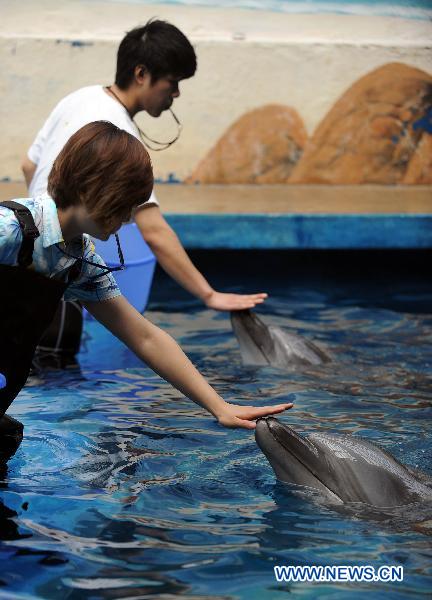
1. Swimming with Dolphins is an effective treatment for children with autism disorders. The article NE China uses dolphin to treat autistic children reminded me of this nonsense that has been around  for many years that swimming with Dophins has therapeutic value for children with autism. My 14  year old autistic  son Conor was diagnosed 12 years ago. The swimming with dolphins myth was around back then and, as the People's Daily article shows, is still swimming around today.

2. Autism isn't really increasing.  No matter how  far away we move from the DSM-IV changes in 1994 we still see many  like Dr. James Coplan rely on the DSM-IV autism definition changes to deny that the incredible increases in autism since then including recent  drastic upward estimates from the CDC of an increase from 1 in 150 to 1 in 110 is due entirely to the now long ago DSM changes of 1994.  And of course the DSM5 will soon be arriving to further obscure the issue and give the Coplans of the world another straw to cling to.


3.Autism Is 100% genetic   As Teresa Binstock said so succinctly over a decade ago in describing the public health authorities' insistence that autism research be directed toward genetic based research it's gotta be genetic. Decades of genetic focused autism research have resulted in a recent massive study report which tells us that .... there is no single genetic autism factor and that therefore ... autism is genetic. YUP let's keep studying the genetic laundry of autistic children and ignoring environmental toxins including those injected into pregnant women and young children as possible causes of autism disorders.  And if ignoring environmental factors, including possible vaccine factors doesn't work lets attack and demean celebrity autism parents for daring to question the safety of vaccine cocktails and environmental contaminants. 

4. Ari Knows Best. Parents evidence and decisions about their children's autism is anecdotal, selfish, emotional, hysterical and untrustworthy.  So let's talk to the latest publicity seeking high functioning person who might be autistic to learn how the autistic mind works. From Jim Sinclair to Ari Ne'eman and all points in between parents shouldn't decide whether their child is high or low functioning, shouldn't talk about their child's autism disorder like it's a ... disorder ... or a medical diagnosis  or even use terms like functioning. Parents should not seek to treat and cure their own children. After all, Ari Ne'eman, a very high functioning, very well connected recent University graduate knows better than Harold Doherty and other parents of autistic children severely affected by autism what is good for our children. Right? Ari says my son doesn't want to be cured? I guess this person with nothing in common with my son, who doesn't know him and has no responsibility for his care should decide right? Apparently the Obama administration thinks so appointing  Mr. Ne'eman, who denies autism is a medical or real disability, and should not be cured, to prominent national US  disability and autism committees.

From swimming with Dolphins to swimming with Jim, Temple, Michelle, Amanda and Ari some autism myths will never die.

Autistic People Don't Like Hugs? Quick, Someone Tell Conor

The news is full or  reports  (1), (2), (3), (4), of autism "hug avoidance", which claim that persons with autism do not like hugs and other physical contact:


"A defect in the brain explains why many people with autism avoid touching and hugs - even from their parents, research has shown." (UKPA) 


Apparently Conor did not get the memo. 


[IMG_8344bc2.JPG]


[Conor+Laugh+022-1.JPG]


Bookmark and Share

Will World Autism Awareness Day Raise Autism Awareness or Create Autism Confusion?


April 2 is World Autism Awareness Day. Hopefully the UN declaration will have the effect of creating real awareness of Autism Disorder and the related Pervasive Developmental Disorders. The prospects of that happening are slim though. It is much more likely that more confusion about autism will be created by the large media organizations such as CNN that dominate world protrayal of autism.

The biggest obstacle to generating real autism awareness will be big business, the big business of maintaining ratings for a large news organization like CNN. To generate media attention CNN will provide feel good stories. CNN will, yet again, interview Amanda Baggs, a "voice of autism" largely created by past CNN promotion. Ms Baggs is a very intellligent and articulate person in her late 20's diagnosed with a pervasive developmental disorder as an adult. She was able to speak throughout her youth and adolescence, had friends and even attended Simon's Rock College for gifted young people. Ms Baggs was previously diagnosed with a variety of other disorders and, prior to meeting an autistic person, and subsequently obtaining her own autism diagnosis, she wrote elequently on topics like schizophrenia, TLE, elves and fairies.

Now, CNN hangs on her every typewritten word, as a true "voice of autism". Ms Baggs story bears no resemblance to that of my son who has very little oral communication ability or to the many autistic people I have met in 10 years of autism advocacy. I am not saying Ms Baggs is not autistic, she has a medical diagnosis, but her autism is the only one I have ever heard of where a person who can communicate orally thoughout her life becomes unable to communicate orally as an adult.

CNN will show other remarkable stories of autistic persons who, thought to be "retarded" ,have become able to communciate through typewriters, technology and Facilitated Communication. What they will probably not do is visit the autistic persons living in residential care facilities because they can not live on their own or visit those autistic people who can not, and, unlike Ms Baggs, never could communicate orally or by any other means. The middle aged lady in the New York residential care facility who could not tell the world that she was being abused by staff because she could not communicate at all, the children and adults who hurt themselves seriously.

CNN will probably not tell the world that the Facilitated Communication they help promote with their feel good stories has been discredited by serious responsibile agencies which have reviewed FC and found that the "communication" is often a reflection of the facilitator's thoughts not the autistic person. (When an autistic person uses technology without a facilitator it is properly described as Augmented Communication not Facilitated Communication). Nor will CNN be likely to mention the recent case in Michigan that saw false sex abuse charges dropped after a family had been ripped asunder and suffered as a result of communications, purportedly from their autistic daughter, which appeared to have been influenced by the "Facilitator."

Will CNN help bust autism myths and raise real autism awareness or will it simply continue to create new myths and create more confusion? We should have a better idea on April 3, 2008.

Labels

أحدث المواضيع

 
Support : Creating Website | Johny Template | Mas Template
Copyright © 2013. Entries General - All Rights Reserved
Template Created by Creating Website Published by Mas Template
Proudly powered by Blogger